Senegal Reinstated as AFCON 2025 Champions After CAS Overturns CAF Decision
Senegal have officially been reinstated as winners of the 2025 Africa Cup of Nations (AFCON) following a landmark ruling on the 24 of November 2026 by the Court of Arbitration for Sport (CAS), bringing an end to months of controversy surrounding the tournament’s final between Senegal and host nation Morocco.
The ruling overturns an earlier decision by the Confederation of African Football (CAF) Appeals Board, which had stripped Senegal of their championship title and awarded Morocco a 3-0 victory by default. With the CAS decision, Senegal’s original 1-0 victory after extra time is restored, confirming the Teranga Lions as the rightful champions of African football’s premier international competition.
The dispute originated from a dramatic and controversial final played in Rabat, Morocco, in January 2026. Senegal defeated the host nation through a decisive extra-time goal by Pape Gueye, but the match was overshadowed by protests, a disputed penalty decision and a temporary walk-off by Senegalese players.
How the AFCON Final Controversy Started
The final between Senegal and Morocco descended into chaos during second-half stoppage time when referee Jean-Jacques Ndala awarded Morocco a penalty following a controversial incident in the Senegalese penalty area.
The decision sparked strong protests from Senegal’s players and technical staff. In response, Senegal’s head coach, Pape Thiaw, instructed his players to leave the pitch, resulting in an interruption of approximately 14 to 15 minutes.
As tensions escalated inside the stadium, Senegal’s influential forward Sadio Mané played an important role in persuading his teammates to return to the field and continue the match.
When play resumed, Morocco’s Brahim Díaz stepped forward to take the penalty. However, his attempted Panenka-style spot-kick was comfortably saved by Senegal goalkeeper Edouard Mendy.
The match subsequently proceeded into extra time, where Pape Gueye scored the decisive goal to give Senegal a 1-0 victory and what appeared to be their second AFCON title.
CAF Strips Senegal of the Title and Awards Morocco Victory
Despite Senegal’s victory on the pitch, the controversy did not end with the final whistle.
Almost two months later, CAF’s Appeals Board overturned the match result, ruling that Senegal had breached the competition regulations by leaving the field of play before the official conclusion of the match without the referee’s authorisation.
The decision relied on AFCON competition regulations, which provide that a team that refuses to play or leaves the field before the regular end of a match without the referee’s permission may be declared the loser and eliminated from the competition.
Consequently, CAF awarded Morocco a 3-0 victory by default, effectively removing Senegal from the tournament’s list of champions and recognising Morocco as the winners.
The decision generated considerable debate within the football community, raising questions about disciplinary procedures, the authority of match officials and the interpretation of competition regulations.
CAS Overturns CAF Decision and Restores Senegal’s Victory
Unwilling to accept the decision, the Senegalese Football Federation (FSF) appealed to the Court of Arbitration for Sport, football’s highest independent judicial authority for resolving sports-related disputes.
The case was heard by a three-member panel in Lausanne, Switzerland, on 8 October 2026.
In its ruling, CAS upheld Senegal’s appeal, effectively overturning CAF’s decision to award Morocco the match by default.
The panel’s reasoning centred on the authority of the referee to determine whether a match should resume or be stopped. It concluded that the referee’s decision to restart the match after both teams returned to the field fell within his exclusive authority.
According to the court, by blowing his whistle to restart play, the referee had determined that the conditions for continuing the match had been satisfied, as both teams were back on the pitch and willing to resume play.
The ruling therefore confirmed that the original result of the final should stand.
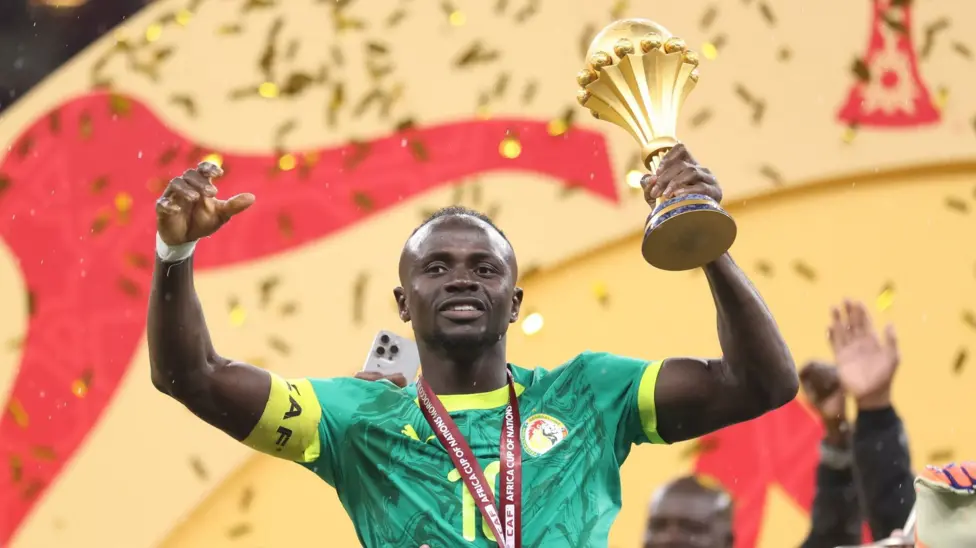
Senegal’s Football Federation immediately celebrated the decision, sharing an image of the national team lifting the trophy in January with the message: “Again and always.”
What the Ruling Means for African Football
Beyond restoring Senegal’s championship title, the CAS decision carries important implications for football governance and the administration of sporting competitions in Africa.
First, it reinforces the importance of respecting the authority and decisions of match officials, particularly their responsibility to determine whether play should continue or be suspended.
Second, it highlights the role of independent sports arbitration in ensuring accountability, fairness and consistency in the interpretation and application of competition regulations.
The dispute also exposes the importance of clear disciplinary procedures within continental sporting institutions. While competition rules must be respected by players, coaches and national football federations, their enforcement must also be consistent with the authority of match officials and established principles of sports justice.
The case further demonstrates that decisions taken by sporting governing bodies are not necessarily final and may be challenged through established independent judicial mechanisms.
Morocco and CAF Yet to Issue Further Reactions
Following the CAS ruling, attention has shifted towards CAF and the Royal Moroccan Football Federation, both of which had previously supported the position that Senegal forfeited the final by leaving the pitch.
CAF President Patrice Motsepe had repeatedly maintained that the organisation would respect and comply with the final decision of the Court of Arbitration for Sport.
The ruling is therefore an important test of CAF’s commitment to institutional accountability, procedural fairness and respect for independent sporting justice.
Although CAS decisions may be challenged before the Swiss Federal Supreme Court, such challenges are generally restricted to limited legal and procedural grounds rather than a full reconsideration of the sporting merits of the case.
Senegal Retain Their Place at the Top of African Football
For Senegal, the CAS ruling represents more than the restoration of a football trophy. It is a significant sporting and institutional victory following months of uncertainty over the outcome of a final they had won on the pitch.
The Teranga Lions can now celebrate their AFCON 2025 championship without the uncertainty created by CAF’s earlier decision.
For Morocco, the ruling brings an end to their recognition as champions under the overturned 3-0 default result, while for African football, the dispute provides an important lesson about sporting regulations, institutional decision-making and the role of independent arbitration.
Ultimately, the restoration of Senegal as AFCON 2025 champions closes one of the most controversial chapters in the recent history of African football and reinforces the importance of fairness, due process and respect for the rule of law in sport.
BeriComsEmpire will continue to follow developments in African football, sports governance and institutional accountability.