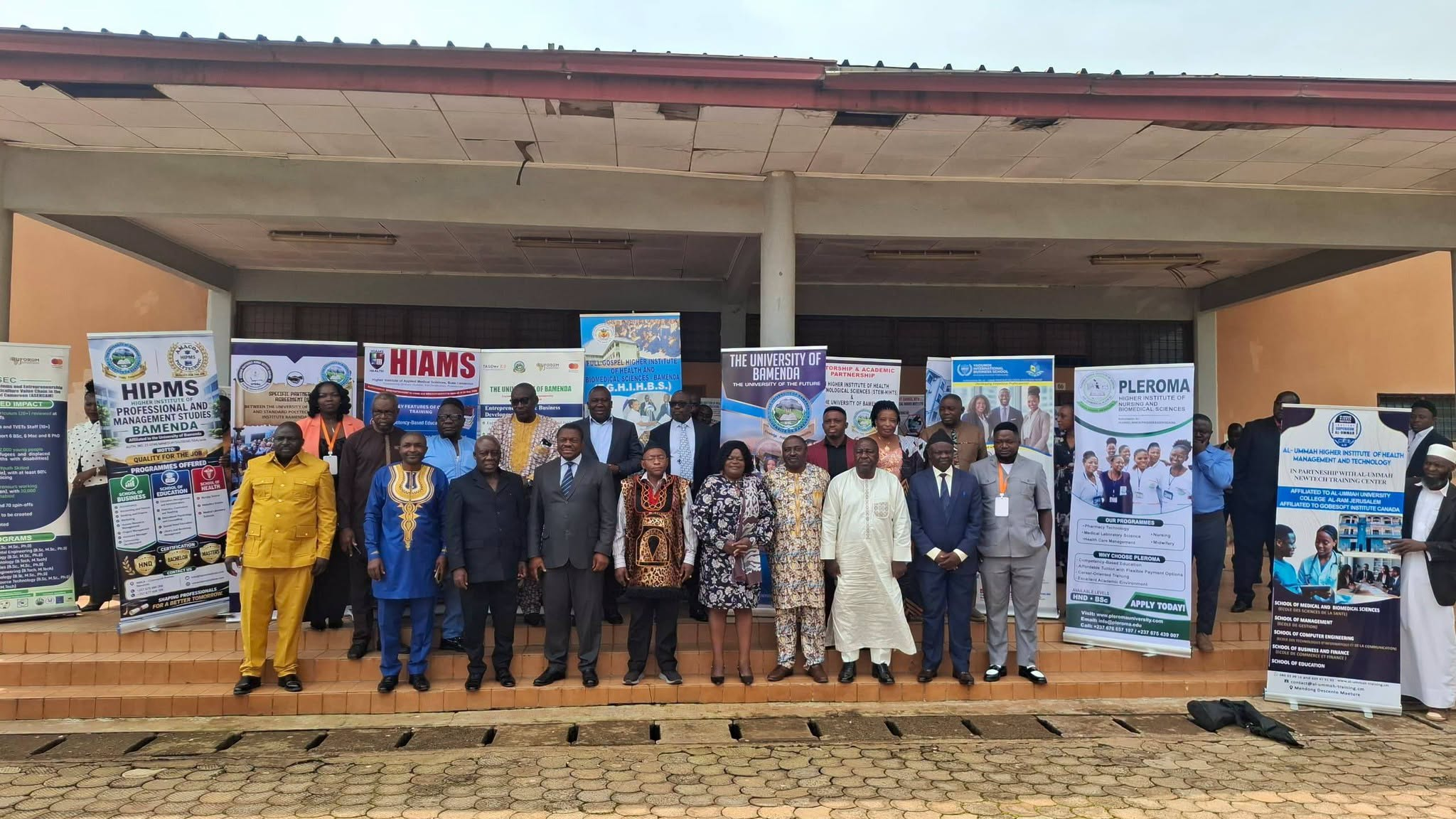
The University of Bamenda (UBa) has taken another significant step towards strengthening higher education in Cameroon by signing 23 Memorandum of Understanding (MOUs) with Private Higher Education Institutions (PHEIs) across the country.
The signing ceremony, officiated by the Vice Chancellor of The University of Bamenda, Professor Theresia Nkuo Akenji, also witnessed the signing of 16 Specific Partnership Agreements (SPAs), three extensions of existing SPAs, and the reconstitution of five SPAs, reinforcing UBa’s commitment to expanding academic collaboration and institutional development.
Speaking during the ceremony, Professor Theresia Nkuo Akenji emphasized the importance of ensuring that all partner institutions strictly comply with the provisions outlined in the Memoranda of Understanding and Specific Partnership Agreements.
She urged representatives of the Private Higher Education Institutions to respect the agreed standards and commitments, noting that the success of the partnerships will depend on effective implementation and adherence to the established framework.
The Vice Chancellor reaffirmed The University of Bamenda’s commitment to promoting excellence, innovation, and quality assurance within Cameroon’s higher education sector through strategic collaboration with accredited private institutions.
The newly signed agreements position the Private Higher Education Institutions as key partners in implementing the TAGDev 2.0 (Transforming African Agricultural Universities to Meaningfully Contribute to Africa’s Growth and Development) programme.
The partnerships are expected to create a sustainable platform for scaling transformative education while strengthening collaboration between public and private higher education institutions in Cameroon.
Through these agreements, participating institutions will work closely with The University of Bamenda to improve academic quality, enhance practical learning, and produce graduates equipped with skills that respond to national and global development challenges.
Key Areas of Collaboration
The Memoranda of Understanding and Specific Partnership Agreements will focus on several strategic areas, including:
- Staff Capacity Development: Retooling academic and administrative staff through continuous professional development and knowledge exchange.
- Curriculum and Pedagogy Reform: Reviewing and redesigning academic programmes to promote hands-on, competency-based, and problem-solving approaches to learning.
- Entrepreneurship and Business Incubation: Strengthening innovation ecosystems by supporting entrepreneurship education and business incubation initiatives for students and graduates.
- Alignment with National Development Policies: Ensuring academic training responds to Cameroon’s youth empowerment agenda and national development priorities.
These collaborative efforts are expected to improve graduate employability, foster innovation, and contribute to sustainable socio-economic development.
The partnership reflects The University of Bamenda’s broader vision of becoming a leading institution in delivering transformative, inclusive, and industry-responsive education.
By fostering stronger collaboration with Private Higher Education Institutions, UBa aims to enhance teaching quality, research, innovation, and community engagement while expanding access to quality higher education across Cameroon.
The initiative also supports efforts to modernize university education through practical learning models, entrepreneurship, and partnerships that prepare students for an evolving labour market.
A New Chapter in Academic Collaboration
The signing of the MOUs and Specific Partnership Agreements marks another milestone in The University of Bamenda’s efforts to build strategic alliances that advance higher education reform and sustainable development.
As implementation begins, the partnerships are expected to deepen institutional cooperation, strengthen capacity building, and contribute to producing graduates equipped with the knowledge, skills, and entrepreneurial mindset needed to drive Cameroon’s development.