Kenya Convicts Paul Mackenzie and 28 Associates Over Shakahola Massacre
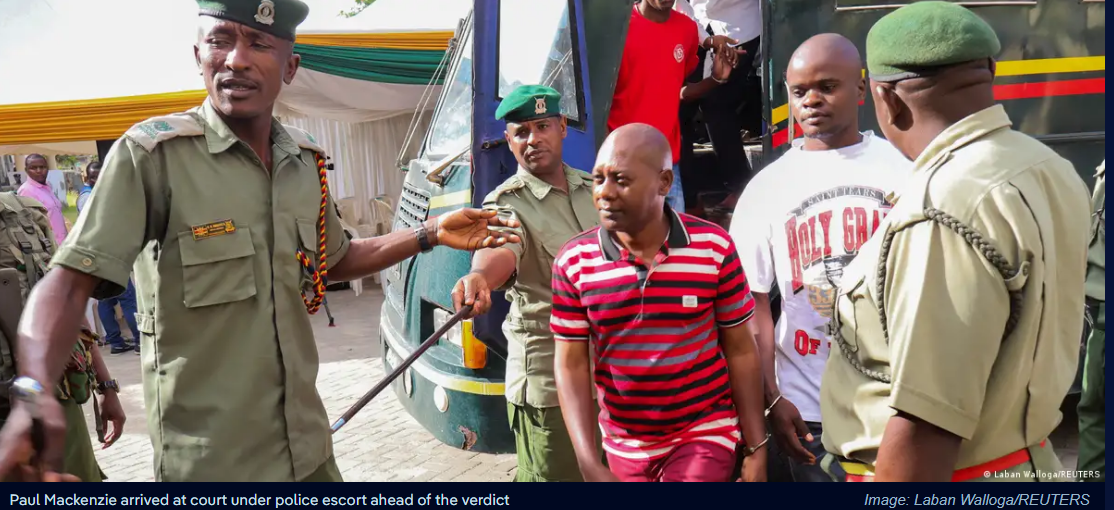
MOMBASA, Kenya — A Kenyan court has convicted self-proclaimed preacher Paul Mackenzie and 28 associates of murder over the deaths of 190 children and one adult in the horrific Shakahola Forest tragedy, a case that has shocked Kenya and attracted international attention.
The convictions, delivered by the Mombasa High Court on Monday, October 19, 2026, mark a significant development in one of Kenya’s most disturbing cases of religiously motivated abuse and mass deaths. According to reports by CNN and Reuters, prosecutors established that the victims died within an organised system of enforced fasting, religious indoctrination and abuse linked to Mackenzie’s Good News International Church.
The case has raised fundamental questions about religious freedom, the protection of children, the accountability of religious leaders and the responsibility of authorities to prevent mass atrocities.
How Religious Teachings Became a Deadly System
Paul Mackenzie, who led the Good News International Church, was accused of persuading his followers that they could attain salvation by starving themselves and their children to death to meet Jesus and enter heaven.
According to the prosecution’s case, the followers were encouraged to abandon their homes, families, livelihoods and ordinary social responsibilities before relocating to Shakahola Forest in southeastern Kenya.
In her lengthy ruling, Justice Diana Kavedza described a system in which religious teachings and a structured hierarchy were allegedly used to direct and enforce deadly fasting. Children were reportedly subjected to fasting first, while guards controlled movement and prevented followers from escaping.
The court also heard that Mackenzie discouraged modern medicine and formal education, further isolating followers from essential services and institutions that could have protected them.
The tragedy demonstrates how religious authority, when manipulated by individuals seeking unquestioned control, can become a tool for exploitation, coercion and devastating human rights violations.
Shakahola Forest: A Mass Death Site That Shocked the World
The first major discoveries of bodies in Shakahola Forest began in April 2023, after authorities received information that led them to investigate the area.
As the investigation expanded, forensic teams uncovered hundreds of bodies buried in shallow graves across the forest. Authorities have recovered 429 bodies, according to the reports cited in the case, and further charges may follow.
Although starvation was central to the prosecution’s allegations, postmortem findings cited during the judgment indicated that some victims died from suffocation, neck compression or head injuries.
These findings underline the seriousness of the allegations and the need for comprehensive investigations into every death, including the identification of victims and the establishment of individual responsibility.
For the families who lost loved ones, the discovery of the mass graves was not simply a criminal investigation. It was the beginning of a painful search for answers about how so many people, including vulnerable children, could die under the control of a religious movement.
Families Demand Justice for Their Loved Ones
The conviction has brought renewed attention to the suffering of families whose relatives were caught up in the cult.
Reuters reported that Francis Wanje, a 62-year-old Kenyan, lost eight family members, including two grandchildren, to the tragedy. Following the judgment, he expressed happiness and said the decision strengthened his confidence in the judiciary.
His experience illustrates the devastating human cost of the Shakahola massacre. Behind the court proceedings are families mourning children, parents, grandchildren and other relatives whose lives were lost under circumstances that remain deeply painful.
While the convictions represent an important step towards accountability, no judgment can restore the lives that were lost. Justice must also involve supporting survivors and affected families, identifying the dead, establishing the full circumstances of the tragedy and ensuring that similar abuses are prevented.
Authorities Face Questions Over Prevention and Oversight
The Shakahola case has also raised difficult questions about the ability of authorities to identify and prevent dangerous religious movements before they cause mass harm.
According to Reuters, Mackenzie had been on the authorities’ radar since 2017, when police searched his premises. His church was reportedly shut down in 2019, after which he relocated to Shakahola Forest.
The subsequent discovery of hundreds of bodies has intensified scrutiny of whether earlier warning signs were adequately investigated and whether stronger preventive measures could have saved lives.
The lesson extends beyond Kenya. Governments and law enforcement institutions must take credible reports of child abuse, coercion, unlawful confinement and threats to life seriously, regardless of whether the alleged conduct is presented as a religious practice.
At the same time, preventive action must respect fundamental rights, including freedom of religion and belief. The objective should not be to criminalise faith or peaceful religious expression, but to intervene lawfully when there is evidence of abuse, exploitation or imminent danger.
Religious freedom cannot serve as a shield for criminal conduct, and the authority to preach must never become a licence to endanger human life.
The Defence Plans to Appeal
Despite the convictions, the legal process may continue.
Mackenzie denied the murder charges, maintaining that he did not force his followers to starve themselves. His defence lawyer, Lawrence Obonyo, told reporters that the defence team intended to appeal the judgment.
The court rejected the argument that the deaths were simply voluntary acts by followers, finding sufficient grounds for the murder convictions reported by the media.
Mackenzie and the other convicted defendants are expected to be sentenced on November 6, 2026, according to Reuters. The planned appeal means that further legal proceedings may follow.
The case will therefore remain significant not only for its human consequences but also for the legal questions surrounding criminal responsibility, coercion, organised abuse and the limits of religious authority.
Protecting Children Must Come Before Blind Obedience
One of the most disturbing aspects of the Shakahola tragedy is the number of children who died.
Children depend on adults for food, shelter, healthcare, education and protection. They cannot be expected to independently assess every religious instruction or resist coercion from adults whom they trust and depend upon.
When adults deliberately deprive children of food, obstruct access to healthcare or expose them to life-threatening practices, the consequences can be irreversible.
The tragedy is a reminder that child protection must remain a shared responsibility involving parents, communities, religious institutions, social workers, law enforcement agencies and governments.
Communities should be encouraged to report credible warning signs, including the systematic denial of food or medical care, the isolation of children from their families, the use of threats to prevent people from leaving a group and instructions that place children’s lives in immediate danger.
Early intervention, public education and accessible reporting mechanisms can help prevent abuse before it escalates into tragedy.
A Wider Lesson for Africa and the World
The Shakahola massacre is a warning that dangerous systems of control can develop when charismatic leaders exploit fear, spiritual vulnerability and unquestioning obedience.
Across societies, religious institutions play important roles in education, humanitarian assistance, moral guidance and community development. Millions of people rely on faith communities for support during periods of hardship.
However, the existence of legitimate religious institutions makes it even more important to distinguish genuine spiritual leadership from manipulation and criminal abuse.
Religious leaders must be accountable for their actions. Communities must be empowered to question dangerous instructions. Authorities must investigate credible threats without discrimination, and courts must ensure that those responsible for criminal acts face the law.
The tragedy also highlights the importance of protecting access to education, healthcare and reliable information. When followers are persuaded to abandon these essential safeguards, their vulnerability to exploitation can increase dramatically.
Conclusion: Justice Must Lead to Prevention
The conviction of Paul Mackenzie and 28 associates represents a major judicial development in the Shakahola Forest tragedy. It offers an important measure of accountability for the deaths of 190 children and one adult, while the planned appeal and sentencing proceedings remain part of the ongoing legal process.
Yet justice cannot end with convictions alone.
Kenya and the international community must continue examining how the tragedy occurred, why earlier warning signs did not prevent the deaths and what safeguards are needed to protect vulnerable people from coercive religious movements.
The ultimate lesson is clear: no religious belief, spiritual promise or claim of divine authority can justify the deliberate destruction of human life.
Children deserve protection, families deserve answers, and every individual deserves the right to practise their faith without being subjected to coercion, abuse or deadly exploitation.
The Shakahola tragedy must serve as a lasting reminder that protecting human dignity requires vigilance, accountability and the courage to act before warning signs become irreversible loss.
BeriComsEmpire will continue to highlight developments that affect human rights, justice, accountability and the protection of vulnerable communities across Africa and beyond.
Source: CNN, reporting by Nimi Princewill and Billy Stockwell, updated October 19, 2026; Reuters, report from Mombasa, Kenya, October 19, 2026.