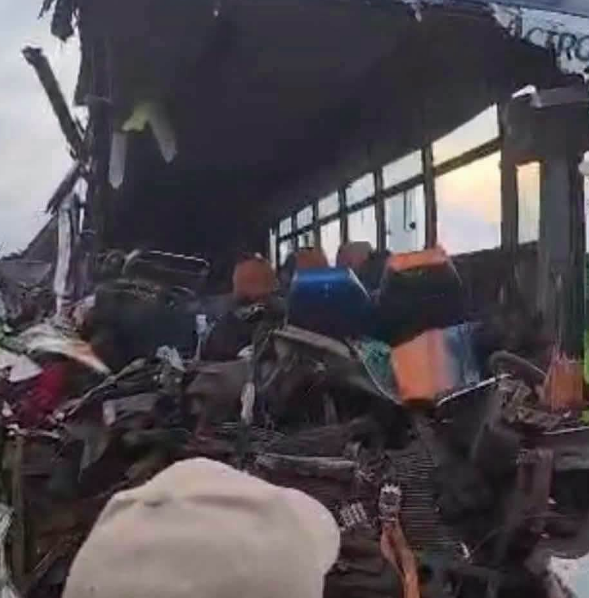
Cameroon has announced tougher measures against road transport operators following a deadly crash at Nomalé, in Ndikiniméki Subdivision of the Centre Region, that claimed 16 lives and injured 42 people on Friday, August 14, 2026.
The tragedy has prompted sanctions from the Ministry of Transport and a renewed call for stronger administrative accountability for transport companies and drivers whose negligence contributes to serious road accidents.
The accident involved a Mangwa Boy passenger bus and articulated vehicles belonging to Tata Emmanuel. According to preliminary findings communicated by the Ministry of Transport, 12 victims died at the scene, while four others later succumbed to their injuries at Bafia District Hospital.
Transport Ministry Suspends Mangwa Boy Operations
Following the accident, the Minister of Transport, Jean Ernest Masséna Ngallè Bibéhè, ordered the suspension of the operating licences of Mangwa Boy Company and the immediate immobilisation of vehicles operating under the affected licences.
The Ministry also ordered an audit of the company’s technical and administrative compliance.
Preliminary investigations indicate that the passenger bus was allegedly travelling at excessive speed and lacked the required safety monitoring device. The articulated vehicles involved in the collision were reportedly improperly parked on the roadway and shoulder.
The Ministry has separately ordered the withdrawal of Tata Emmanuel’s third-category transport licence, the immobilisation of vehicles operating under the licence and a one-year suspension of the driver’s licence of the driver concerned.
A FCFA 5 million fine has also been imposed for illegal operation in the road transport sector.
The measures highlight the potential legal consequences for both passenger transport operators and heavy-duty vehicle owners where breaches of road safety requirements contribute to loss of life.
Atanga Nji Calls for Local Bans on Negligent Transport Agencies
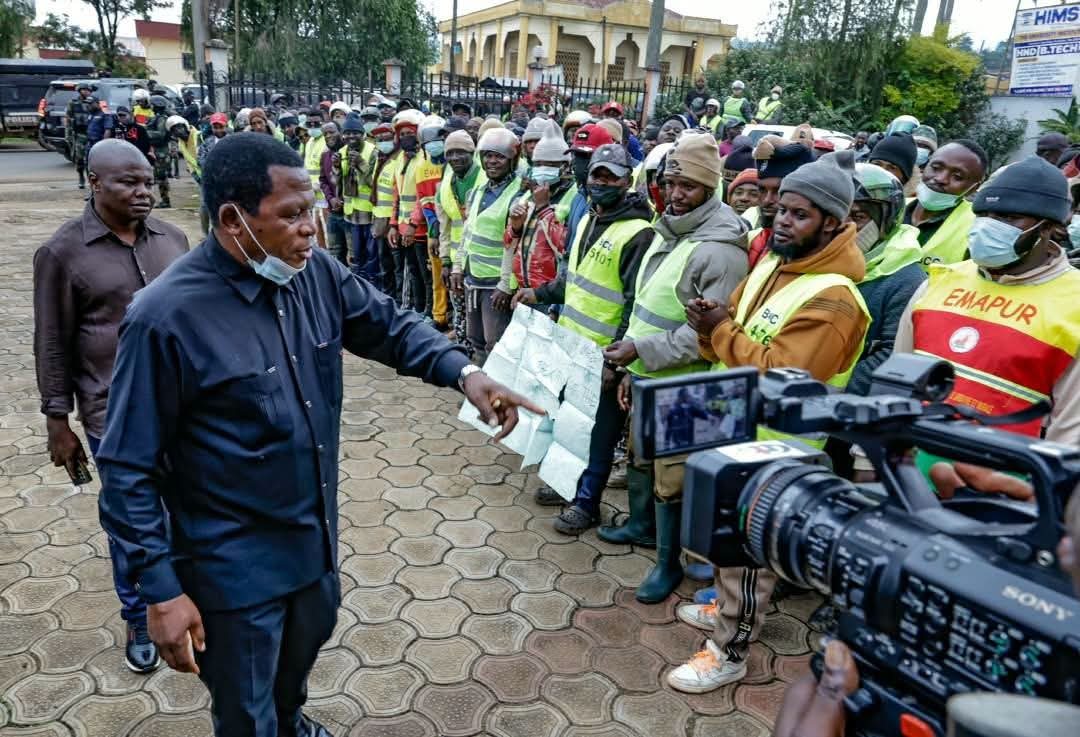
Twenty-four hours after the tragedy, Minister of Territorial Administration Paul Atanga Nji visited the crash site at Nomalé, accompanied by the Governor of the Centre Region, Naseri Paul Bea, and other administrative authorities.
The Minister conveyed the condolences of President Paul Biya to the families of the victims and visited the scene before proceeding to Bafia District Hospital, where dozens of injured victims were receiving treatment.
Atanga Nji described the 16 deaths as an unacceptable loss and called for stronger preventive action by administrative authorities.
He specifically urged Senior Divisional Officers to take action against transport agencies whose vehicles are involved in serious accidents resulting from driver negligence.
Under the proposed approach, an SDO could issue an administrative order prohibiting such a travel agency from operating within the SDO’s administrative jurisdiction.
“We must take measures at every level,” Atanga Nji said.
The directive represents a significant emphasis on decentralised administrative enforcement, placing greater responsibility on local authorities to respond to serious road safety violations.
Crash Raises Questions About Road Safety and Accountability
According to information provided following the accident, the bus collided from behind with a stationary timber truck.
Preliminary accounts indicate that the truck had broken down while travelling towards the West Region. Its driver reportedly attempted to warn approaching motorists by placing warning signs on the road. The bus driver allegedly failed to notice the warnings before crashing into the truck.
Fourteen people, including the bus driver, reportedly died at the scene, while two others later died in hospital.
The circumstances raise important questions concerning driver vigilance, speed management, vehicle safety compliance, warning systems, parking practices and the enforcement of road traffic regulations.
From a human rights perspective, road safety is not merely a transport-management issue. The protection of life imposes responsibilities on public authorities and private operators to take reasonable measures to prevent foreseeable loss of life.
Dangerous Parking Becomes a Growing Road Safety Concern
The Ministry of Transport says dangerous parking by heavy-duty and goods-transport vehicles has become a significant road safety concern.
Since June 1, 2026, authorities have recorded 35 road accidents linked to the phenomenon.
Road safety teams have also identified 61 potentially dangerous vehicles parked along three major routes:
- 27 on the Yaoundé–Douala road;
- 19 on the Yaoundé–Bafoussam road; and
- 15 on the Yaoundé–Bertoua road.
In response, the Minister of Transport has ordered intensified enforcement operations from August 17 to September 30, 2026.
Vehicles found dangerously or illegally parked on roads or road shoulders are expected to be systematically removed. Owners and drivers may face administrative sanctions, without prejudice to possible judicial proceedings.
Government Warns Ahead of School Resumption
The intensified enforcement comes at a particularly sensitive period, as increased travel is expected during the end-of-holidays period and ahead of the reopening of schools.
The Ministry has called on drivers and other road users to exercise greater caution and responsibility.
For transport companies, the latest measures also send a clear message that road safety obligations cannot be treated as administrative formalities. Compliance with licensing conditions, vehicle safety requirements, driver conduct and parking regulations can have direct consequences for the right to operate.
Human Rights and Legal Perspective
The Ndikiniméki tragedy underscores the importance of effective road safety governance, corporate responsibility and access to justice for victims of preventable accidents.
Where investigations establish negligence or violations of safety regulations, administrative sanctions may serve as an immediate preventive mechanism. However, accountability should also be accompanied by transparent investigations capable of establishing individual and institutional responsibility.
Families who have lost relatives and survivors who have suffered injuries may also require appropriate assistance, including access to medical care, information, compensation mechanisms and effective legal remedies where applicable.
The authorities’ response should therefore extend beyond immediate sanctions. It should include sustained enforcement of road safety laws, regular inspection of public transport operators, effective monitoring of heavy-duty vehicles, proper road-warning systems and stronger public awareness campaigns.
The Nomalé tragedy should serve as a reminder that preventing road deaths requires enforcement before disaster occurs—not only sanctions after lives have been lost.