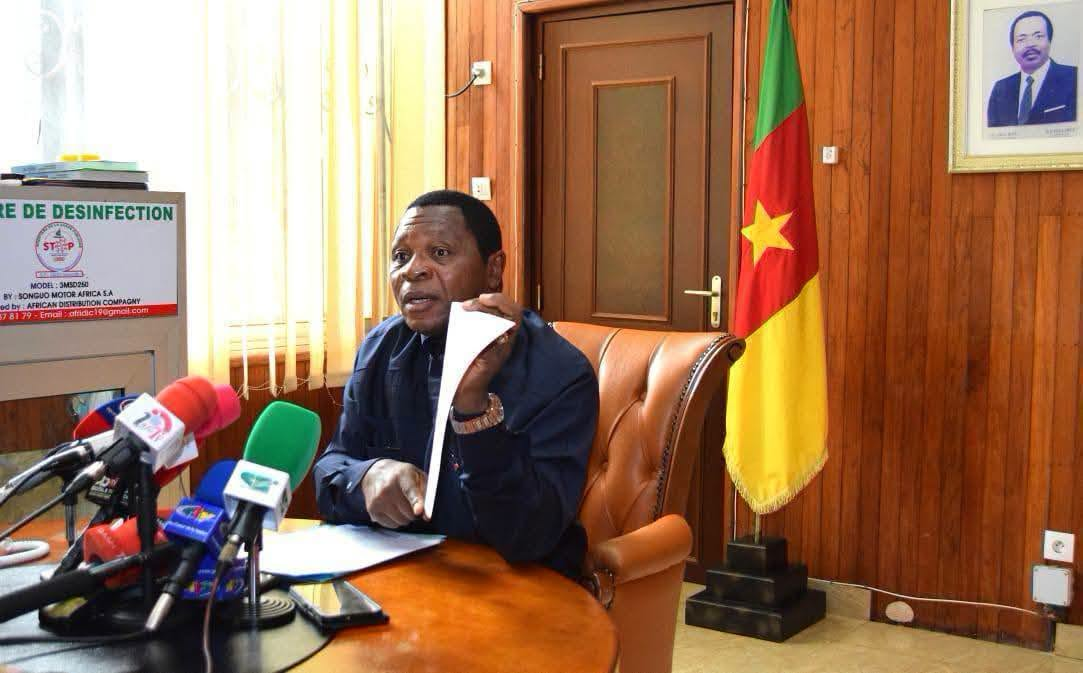
Cameroon’s Minister of Territorial Administration, Paul Atanga Nji, has called on the leadership of the Jehovah’s Witnesses in Cameroon to ensure that members comply with the country’s laws, respect national symbols, and fulfill their civic responsibilities.
Speaking during a meeting with leaders of the religious denomination on 8 July 2026 in Yaoundé, the Minister stressed that while Cameroon guarantees freedom of religion, all legally recognized religious organizations are equally required to operate within the framework of national laws and contribute to national unity.
Government Raises Concerns Over National Anthem and State Symbols
During the discussions, Minister Atanga Nji expressed concern over reports that some Jehovah’s Witnesses refrain from singing the Cameroon national anthem during official ceremonies and do not participate in acts of respect toward national symbols, including the national flag.
He emphasized that respect for the Republic, its institutions, national emblems and patriotic symbols is a civic obligation that applies to every citizen regardless of religious affiliation.
The Minister reportedly warned that continued non-compliance with the laws governing public conduct could expose the denomination to legal consequences.
Calls for Greater Cooperation with Public Policies
The Minister urged the church leadership to educate members on the importance of respecting state institutions and supporting government policies that promote national cohesion and public welfare.
Referring to Romans 13:1–7, he stated that the biblical passage teaches obedience to governing authorities and encouraged church leaders to emphasize these principles in their teachings.
According to the Minister, religious organizations have an important role in promoting responsible citizenship alongside their spiritual mission.
Concerns Over Blood Transfusion and Public Health
The meeting also addressed the denomination’s longstanding position on blood transfusions, a doctrine based on the Jehovah’s Witnesses’ interpretation of biblical passages including Acts 15:28–29, Genesis 9:4, and Leviticus 17:10–14.
Jehovah’s Witnesses generally decline transfusions involving whole blood and its primary components, believing such procedures conflict with their religious convictions.
Minister Atanga Nji questioned the practice, particularly regarding access to life-saving medical care, and encouraged the denomination to review its position in what he described as the interest of “the peace of Christ.”
He also sought clarification regarding reports linking the church to opposition to vaccination.
However, Jehovah’s Witnesses do not prohibit vaccination as a matter of doctrine. The denomination maintains that vaccination is a personal medical decision left to individual members.
Church Reaffirms Respect for Government
In response, leaders of Jehovah’s Witnesses reiterated that their faith teaches respect for governmental authorities. Citing Romans 13:1–7, they explained that members are encouraged to obey the laws of the country while remaining faithful to their religious beliefs. Church representatives stated that the denomination’s primary mission remains preaching the Bible and promoting peaceful coexistence. They also assured government officials of their willingness to continue constructive dialogue with state authorities.
Historical Context
The Minister reminded church leaders that Jehovah’s Witnesses were prohibited from operating in Cameroon between 1960 and 1982 before receiving legal recognition through a presidential decree in 1982.
He noted that the legal status granted to the denomination carries corresponding obligations to comply with the Constitution and laws of the Republic.
Religious Freedom and Civic Responsibility
Cameroon guarantees freedom of religion under its Constitution and recognizes numerous religious organizations operating across the country.
The meeting between government officials and Jehovah’s Witnesses highlighted the ongoing balance between protecting freedom of religion and ensuring compliance with civic duties and national laws.
No sanctions or ban were announced following the meeting. Instead, the engagement concluded as an official dialogue aimed at addressing concerns over civic participation, public health, and national unity while preserving the constitutional right to freedom of worship.
Understanding Jehovah’s Witnesses’ Position
Jehovah’s Witnesses are known globally for their doctrine of religious neutrality, which influences their participation in certain patriotic ceremonies. They generally avoid actions they believe could compromise their religious convictions.
The denomination also maintains its religious stance regarding blood transfusions while accepting many other forms of modern medical treatment. Decisions regarding vaccination are left to individual members rather than mandated by church doctrine.
Looking Ahead
The discussions between the Ministry of Territorial Administration and the leadership of Jehovah’s Witnesses reflect broader questions about the relationship between religious freedom, public policy, and civic obligations in Cameroon.
Whether the dialogue results in changes to religious practice or improved cooperation between the government and the denomination remains to be seen. For now, both parties have reaffirmed their commitment to continued engagement within the framework of the law.
Key Takeaways
- Cameroon has urged Jehovah’s Witnesses to respect the national anthem, flag, and state institutions.
- The government raised concerns over the denomination’s stance on blood transfusions and sought clarification on vaccination.
- Church leaders reaffirmed that members are taught to obey government authorities while practicing their faith.
- No sanctions or ban were announced following the meeting.
- The dialogue focused on balancing constitutional religious freedom with civic responsibility and national unity.