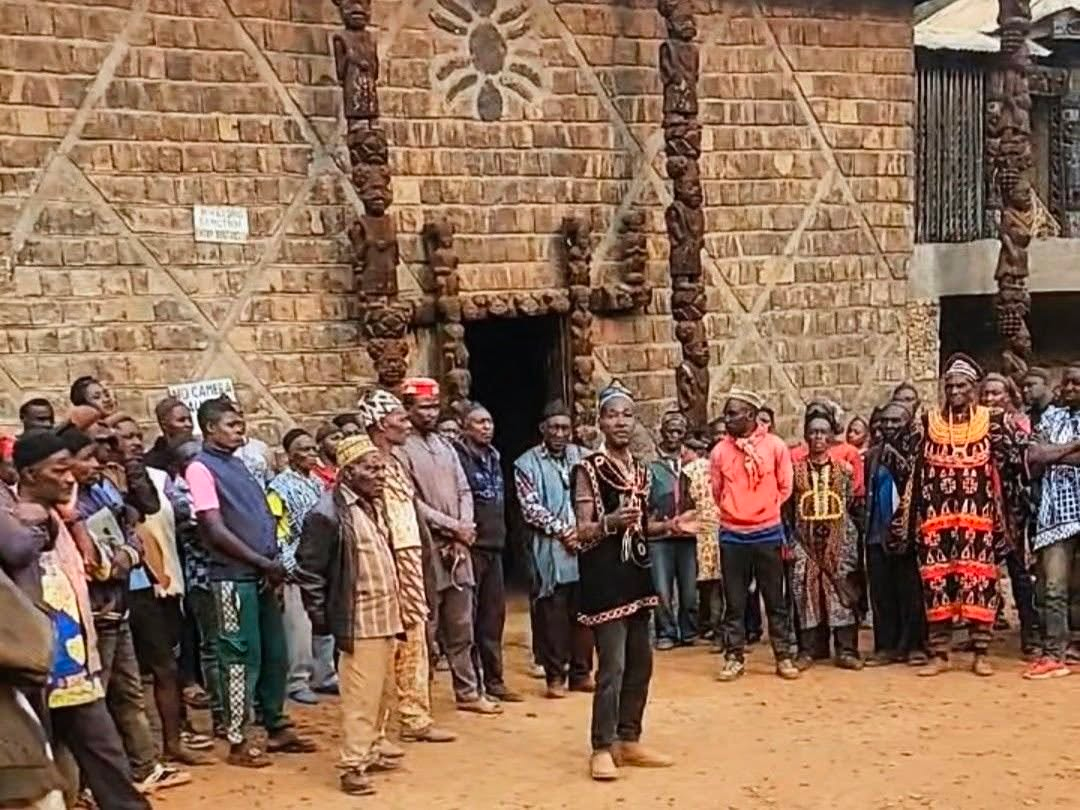
A major cultural and administrative decision has emerged from Nso land, a prominent traditional community located in Bui Division, Northwest Region of Cameroon. On 4 March 2026, the powerful traditional regulatory society Nwerong Nso issued a legally binding directive prohibiting churches and mosques from charging burial fees in cemeteries across Nso land.
The declaration was made during one of Nwerong’s traditional weekly outings in Nto Nso (Nso Palace), which typically takes place on Ntangrin, one of the eight traditional days of the Nso calendar. Through a formal proclamation known as “Saa-Nwerong”, an authoritative instruction from the Nso traditional administration, the society ruled that no religious institution has the right to demand payment from families for burial spaces or graves in cemeteries in Nso territory.
The decision has immediately sparked discussion within the Nso community, religious institutions, and traditional governance structures across the Northwest Region of Cameroon.
Within the traditional political system of the Nso people, Nwerong plays a central and powerful role. The institution can be compared to a combination of legislative and judicial authority within the Nso traditional administration.
Nwerong enforces cultural laws, protects communal interests, and ensures that customs and traditions are respected across the community. Its authority operates in close collaboration with the Fon of Nso, the supreme traditional ruler and custodian of Nso land or the paramount Fon of Bui. .
Because of this status, directives issued through Saa-Nwerong carry binding authority and are rarely challenged. In Nso cultural understanding, defying such instructions is considered both a cultural offense and a violation of traditional law.
During the announcement, Nwerong authorities strongly criticized the commercialization of burial spaces by some churches and religious bodies operating on Nso land. Traditional leaders emphasized that religious and cemetery land in Nso was never sold to religious institutions. Instead, the land was historically granted freely by the Fon and Nwerong for community use.
According to the traditional council, burial grounds were originally established as places of hospitality, particularly intended for travelers and strangers who died far from their ancestral homes, Visitors whose bodies could not easily be transported back to their villages, Members of the wider community who required a dignified burial space.
Because these lands were offered for communal welfare, Nwerong argues that religious institutions cannot legitimately profit from burial spaces on land they neither bought nor own. Traditional authorities reportedly questioned, “If churches sell grave spaces, what do they give to Nwerong and the Fon, who are the owners of the land?”
One of the motivations behind the directive is the growing concern that some churches have begun charging grieving families significant amounts of money before allowing burials in church-managed cemeteries. In some reported cases, families were allegedly required to pay up to 100,000 FCFA for burial spaces.
Nwerong expressed disappointment that places of worship were gradually becoming revenue-generating institutions in matters related to burial rites, which traditionally emphasize dignity, compassion, and communal solidarity.
The Nwerong therefore declared unequivocally that, No church or mosque should bury anyone and request even one franc (1 FCFA) for burial spaces in cemeteries located on Nso land. The directive from Nwerong takes immediate effect across all Nso territories and religious institutions, including churches and mosques, have been warned that any continued collection of burial fees may constitute a violation of traditional authority.
Such violations could lead to severe traditional sanctions, including the possibility of being symbolically ordered to “cross the River Bui,” a phrase within Nso cultural context that implies banishment or exclusion from the community. Nwerong also called on residents to actively participate in enforcing the decision by reporting any institution that demands money for burial spaces. Community members were reminded that cemeteries are communal heritage spaces, not avenues for financial exploitation.
The decision is widely viewed as a reassertion of the authority of traditional institutions over communal lands in Nso territory. In many communities across Cameroon’s Northwest Region, land used for cemeteries is traditionally allocated by local palaces or customary authorities and then managed in cooperation with churches or community groups. By banning burial fees, Nwerong has effectively clarified that management responsibilities do not translate into ownership rights.
The new directive is expected to have significant social and cultural implications across Nso land. Greater Accessibility to Burial Spaces as families facing financial hardship will no longer be prevented from burying loved ones due to high cemetery fees. Restoration of Cultural Values as the decision reinforces Nso traditions that prioritize community solidarity, dignity in death, and hospitality. Clearer Boundaries for Religious Institutions as Churches and mosques may need to adjust their administrative practices regarding cemetery management and strengthening Traditional Governance because the directive highlights the continuing relevance and authority of traditional institutions in community governance.
In Nso cultural understanding, Nwerong is regarded as the ultimate guardian of customary law. Historically, the institution has played a crucial role in maintaining social order and protecting communal resources.
For this reason, many within the Nso community believe compliance with the directive will be widespread, as challenging Nwerong’s authority rarely ends well for violators.
The latest decision sends a clear message that cultural values and communal land must not be commercialized. By banning burial fees in cemeteries, Nwerong has taken a step aimed at protecting vulnerable families while preserving the original purpose of communal burial grounds. The move underscores the enduring importance of traditional governance systems in Cameroon, particularly in communities where customary authority continues to guide social and cultural life. For the people of Nso, the directive represents more than a regulatory decision, it is a reaffirmation of identity, culture, and the principle that communal resources should serve the entire community