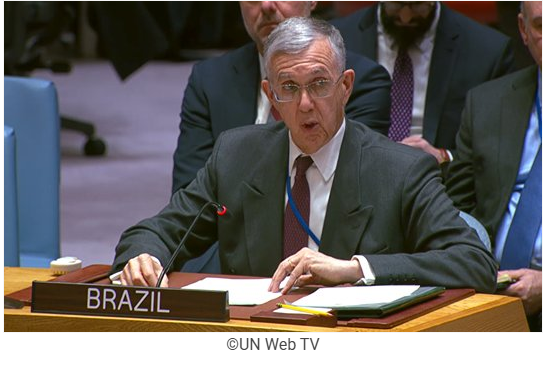
As reported by the United Nations, Brazil’s representative Sérgio França Danese delivered a firm and principled rejection of armed intervention in Venezuela. His words were not only a defense of one nation’s sovereignty but also a reminder of South America’s collective commitment to peace.
“South America is a zone of peace.” This declaration resonates deeply in a region that has long sought to distance itself from external military entanglements. For Brazil, the bombings on Venezuelan territory and the capture of its President represent a “blatant violation of the Charter of the UN and international law”, a line that must never be crossed.
Brazil’s position underscores the inviolability of sovereignty as enshrined in the UN Charter. Armed intervention, regardless of the justification, undermines the principle that nations must be free to determine their own destinies. International norms, Danese stressed, “allow no exceptions based on interests or ideology.”
This is a crucial reminder: selective application of international law erodes trust in global institutions and fuels instability.
The assertion that South America is a zone of peace is both aspirational and historical. Unlike other regions plagued by recurring wars, South America has largely avoided interstate conflict in recent decades. Brazil’s warning is clear: external interventions threaten this fragile equilibrium, risking spillover effects that could destabilize the entire continent.
Danese cautioned against the re-emergence of spheres of influencea Cold War relic that divides the world into zones of domination. Such dynamics weaken global governance, leaving international institutions unable to respond effectively to crises.
The consequences are already visible like multiple conflicts, humanitarian needs and military spending
Brazil’s intervention is not just about Venezuela—it is about the future of multilateralism. If powerful states continue to bypass collective decision-making, the legitimacy of the UN system itself is at risk.
The challenge is stark: will the world uphold the principles of sovereignty and peace, or allow ideology and interests to dictate except